Hair Loss Treatment FAQs
Understanding hair loss is the first step toward effective treatment.
Dr Graft Hair Transplant, Sydney
This page provides general information about hair loss treatments and hair restoration procedures offered at Dr Graft Hair Transplant. Individual suitability and recommendations are discussed during consultation.
How do tailored hair loss treatments work?
Tailored hair loss treatments involve an individualised approach based on medical assessment, hair loss type, progression, and personal circumstances. Treatment recommendations are guided by clinical findings rather than a one size fits all approach.
Hair loss varies in cause, pattern, severity, and rate of progression between individuals, which means treatment suitability differs from person to person.
Factors may include the underlying cause of hair loss, stage and pattern of thinning, donor hair availability, scalp health, medical history, and long term management goals.
No. Not all individuals require surgical treatment, and non surgical management or monitoring may be appropriate in some cases.
Yes. Hair loss is often progressive, and treatment strategies may be adjusted following ongoing assessment and review.
Who may benefit from a tailored approach?
A tailored approach may be appropriate for individuals at different stages of hair loss and with different treatment goals. Suitability is determined through consultation and medical assessment.
Yes. Early or progressive hair loss may benefit from careful planning and monitoring.
Yes. Individuals who have previously undergone hair restoration may require reassessment and long term planning.
Yes. Conservative planning considers potential future hair loss and aims to support sustainable management over time.
Who may not be suitable for certain treatments?
Not all hair loss treatments are appropriate for every individual. Some procedures or therapies may not be recommended based on clinical findings.
Reasons may include advanced or unstable hair loss, limited donor hair availability, medical conditions, or unrealistic expectations.
Alternative management strategies, conservative options, or ongoing monitoring may be discussed during consultation.
What does a consultation involve?
A consultation allows for detailed assessment and discussion before any treatment is recommended. All consultations are conducted within a medical led framework.
Consultations are conducted by an Australian trained and registered medical practitioner.
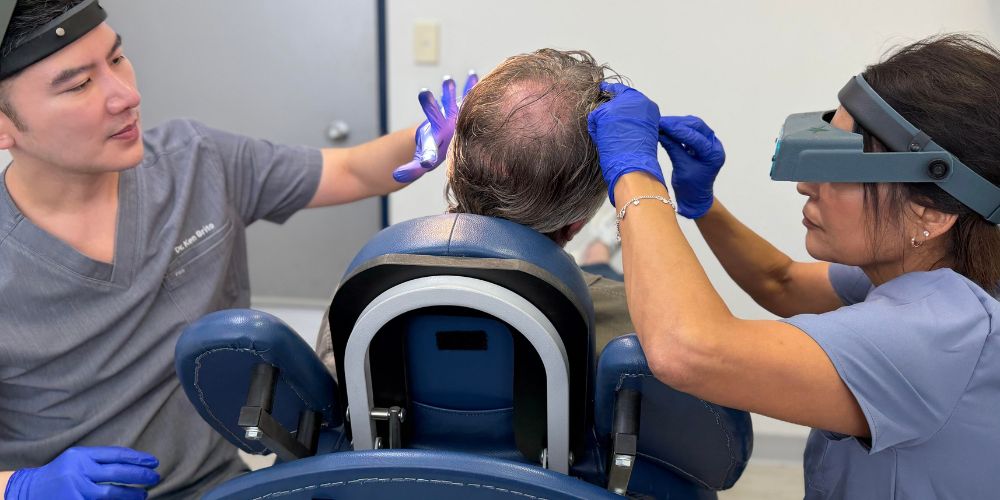
Assessment may include hair loss history, scalp and donor area examination, hair characteristics, and medical history review.
Yes. Appropriate surgical and non surgical options, along with suitability and limitations, are discussed.
Yes. No hair loss treatment is recommended without prior medical consultation.
Initial consultations are offered at no cost and may be conducted in person, by phone, or via video consultation.
What hair transplant procedures are offered?
Hair transplant procedures involve redistributing existing hair follicles from donor areas to areas of thinning or hair loss. The most appropriate technique depends on individual assessment.
FUE (Follicular Unit Extraction) involves removing individual hair follicles directly from the donor area.
FUT (Follicular Unit Transplantation) involves removing a narrow strip of scalp from the donor area, from which follicular units are prepared.
Technique selection depends on factors such as hair loss pattern, donor hair availability, scalp characteristics, and long term planning considerations.
No. Suitability varies and is assessed during consultation.
What is PRP therapy for hair loss?
PRP (Platelet Rich Plasma) therapy is a non surgical treatment that may be considered as part of a broader hair loss management plan for some individuals.
PRP involves using components of a patient’s own blood, processed and applied to the scalp as part of medical treatment.
No. PRP does not replace a hair transplant but may be discussed as a standalone or supportive option in selected cases.
No. Suitability depends on individual factors and is discussed during consultation.
What are the risks and recovery considerations?
Hair restoration procedures and treatments carry potential risks and recovery considerations, which vary depending on the treatment performed.
Hair transplant procedures are surgical procedures and carry potential risks such as infection, swelling, scarring, or temporary discomfort.
Recovery varies between individuals and procedures. Post treatment care instructions and follow up arrangements are provided as clinically appropriate.
Yes. Risks, limitations, and aftercare requirements are discussed during consultation before any treatment is recommended.
How is ongoing care managed?
Hair loss is often an ongoing process, and continued assessment may be required over time.
Yes. Follow up and review are arranged based on clinical need and individual circumstances.
Yes. Treatment strategies may be adjusted if hair loss progresses or stabilises.
How do I arrange a consultation?
A consultation allows personalised assessment and discussion of appropriate options.
You can contact the clinic to arrange a consultation.