
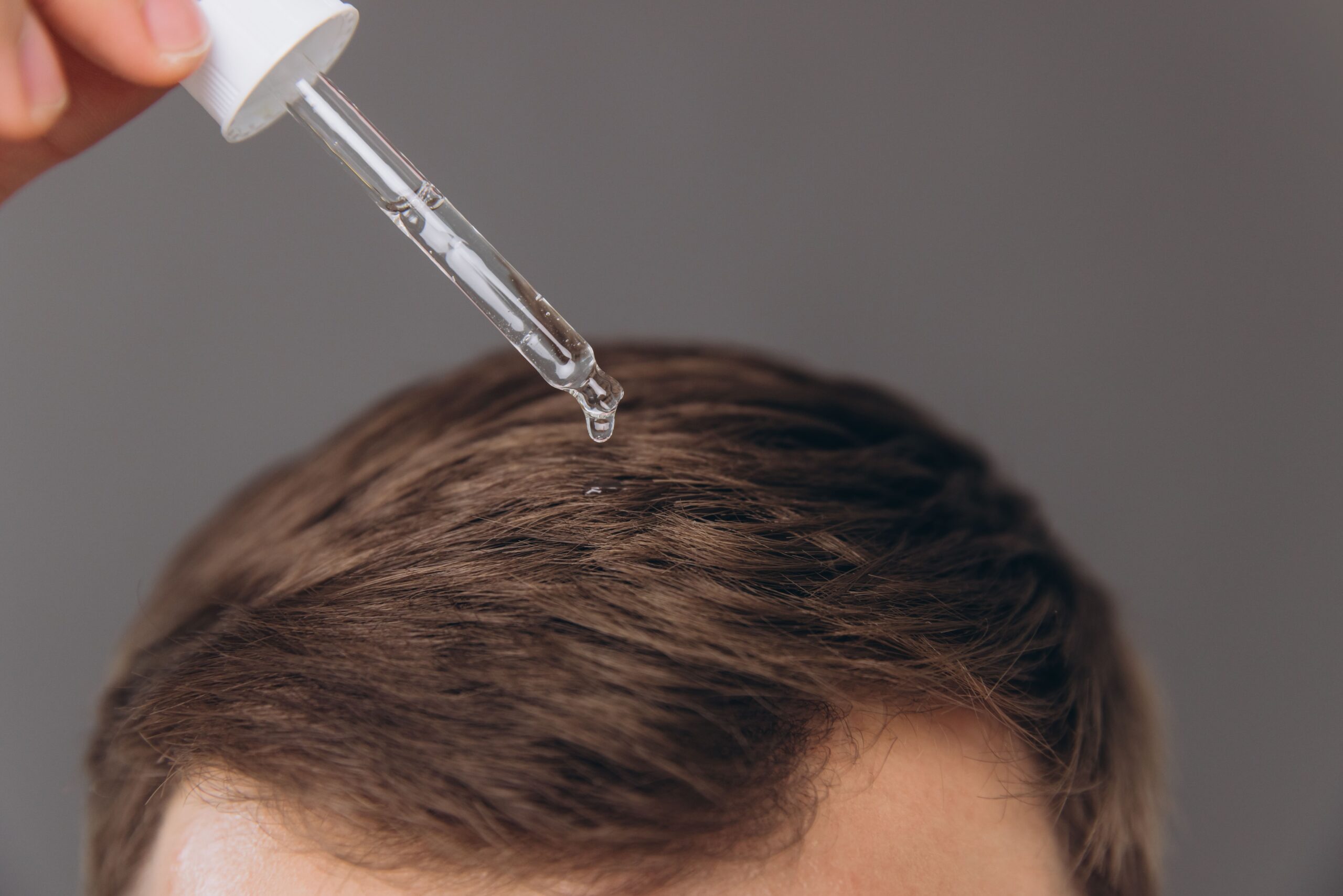
Minoxidil and Finasteride are two of the most commonly used treatments for male pattern hair loss. While both can be effective, they work in very different ways, and understanding these differences can help patients make informed decisions with their healthcare provider.
How Minoxidil Works
Minoxidil is a topical or oral medication that helps stimulate hair follicles and encourage new growth. It does not target hormones; instead, it improves the environment around the follicle.
Minoxidil helps by:
- Increasing blood flow to the scalp
- Prolonging the hair’s growth phase
- Supporting thicker, stronger hair over time
It is often used to boost growth, especially in areas where follicles are still active but producing weaker hairs.
How Finasteride Works
Finasteride works internally by reducing levels of DHT, the hormone responsible for shrinking hair follicles in male pattern baldness.
Finasteride helps by:
- Lowering DHT levels in the scalp
- Protecting vulnerable follicles from further miniaturisation
- Slowing or stabilising ongoing hair loss
- Supporting regrowth in thinning areas
Finasteride is particularly effective for crown thinning, where DHT sensitivity is highest.How Finasteride Works
Finasteride works internally by reducing levels of DHT, the hormone responsible for shrinking hair follicles in male pattern baldness.
Finasteride helps by:
- Lowering DHT levels in the scalp
- Protecting vulnerable follicles from further miniaturisation
- Slowing or stabilising ongoing hair loss
- Supporting regrowth in thinning areas
Finasteride is particularly effective for crown thinning, where DHT sensitivity is highest.
Which Is More Effective?
Research suggests that Finasteride generally provides stronger results for male pattern hair loss, especially at the crown. Minoxidil is effective too, but its impact is often milder and more focused on stimulating growth rather than preventing loss.
In simple terms:
- Finasteride = slows loss + protects follicles
- Minoxidil = stimulates growth + strengthens follicles
Why Many Specialists Recommend Using Both
Because Minoxidil and Finasteride work through different mechanisms, combining them often produces better long‑term results than using either alone.
Together, they can:
- Reduce ongoing hair loss
- Improve density
- Support new growth
- Maintain results more effectively over time
This combination approach is widely used in clinics and supported by research, but treatment decisions should always be made with a qualified healthcare professional.
When to Consult a Specialist
A hair‑growth specialist or clinician can help determine:
- Whether Minoxidil, Finasteride, or both are appropriate
- What type of hair loss you have
- Whether your follicles are still active
- What realistic results you can expect
- How to monitor for side effects or changes
Hair loss can have many causes, so professional assessment is important before starting any treatment.