
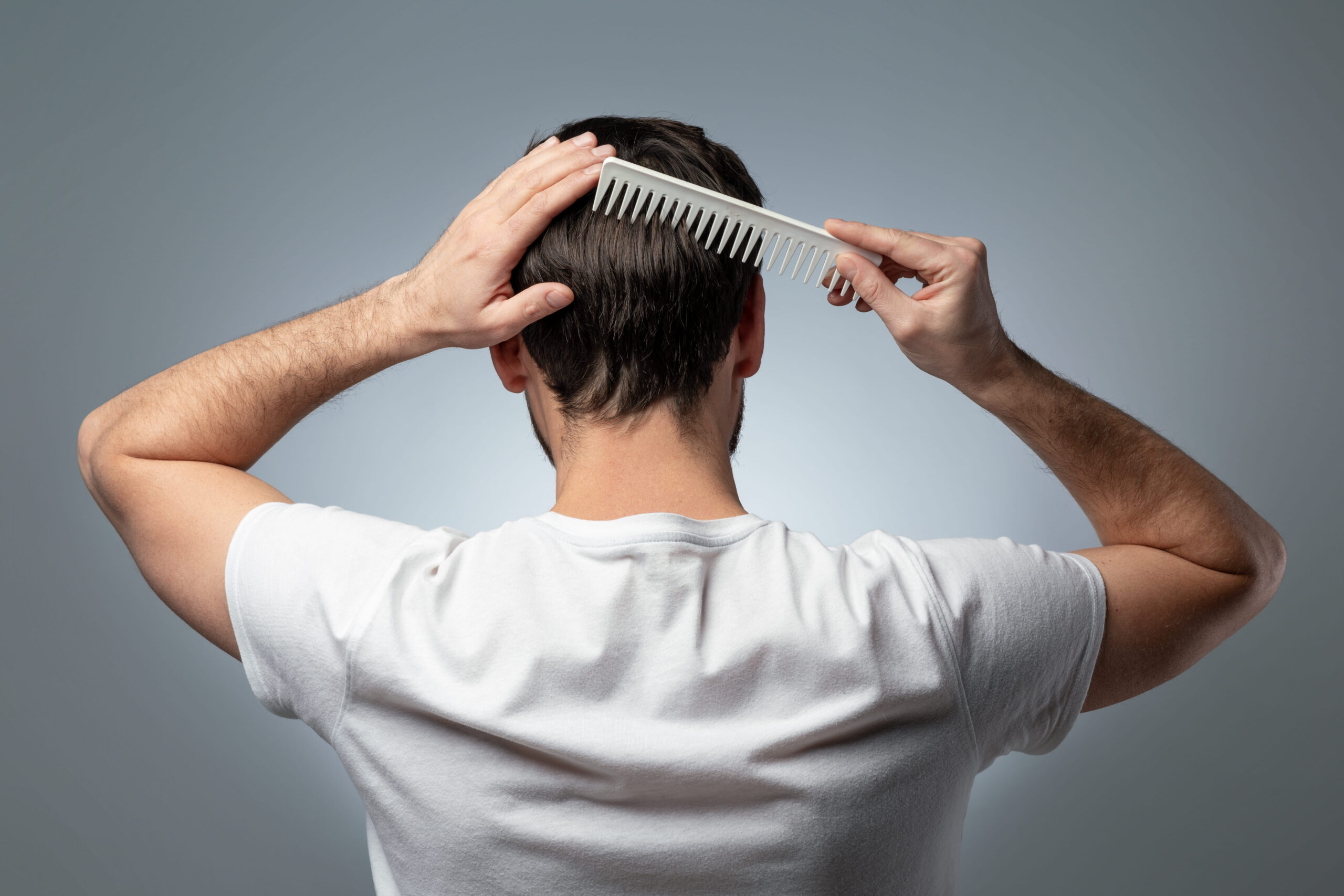
Explained by your Elite Hair Clinic doctor
Following a hair transplant, it is very common for patients to experience a period of shedding, often referred to as shock loss. This phase can be unsettling if you are not expecting it, but medically, it is a normal and temporary part of the recovery process.
As your doctor, I want you to understand exactly what is happening, why it occurs, and what you can expect in the months ahead.
What Is Shedding?
After the procedure, the transplanted follicles enter a resting phase known as telogen. During this phase, the hair shafts—the visible strands—are released and shed. It is important to emphasise that the follicles themselves remain healthy and intact beneath the scalp. Shedding does not mean the grafts have failed.
This is simply the follicle resetting its growth cycle after the stress of surgery.
When Does Shedding Occur?
The timeline is predictable:
- 2–4 weeks post‑transplant: Shedding typically begins
- 4–6 weeks: Shedding is often at its peak
- 2–3 months: The shedding phase gradually settles
- 3–4 months: New hairs begin to emerge
- 6–12 months: Noticeable improvement in density and coverage
- 12–18 months: Final maturation and thickening of the transplanted hair
This cycle is universal and expected in almost all patients.
Why Does Shedding Happen?
Shedding occurs due to the physiological stress placed on the follicles during transplantation. Several factors contribute:
- Surgical Trauma: Even with meticulous technique, the act of relocating follicles temporarily disrupts their growth cycle.
- Adaptation to a New Environment: Each follicle must establish a new blood supply and adjust to its new location.
- Natural Hair Cycle Reset: The follicle pauses before re‑entering the active growth phase (anagen).
This is a normal biological response and not a sign of damage.
Normal vs. Concerning Shedding
Most shedding is expected and resolves naturally. However, if shedding continues beyond 3–4 months, or if you notice unusual thinning in non‑transplanted areas, it is appropriate to contact your care team. We can assess whether additional factors—such as stress, medication changes, or underlying scalp conditions—may be contributing.Most shedding is expected and resolves naturally. However, if shedding continues beyond 3–4 months, or if you notice unusual thinning in non‑transplanted areas, it is appropriate to contact your care team. We can assess whether additional factors—such as stress, medication changes, or underlying scalp conditions—may be contributing.
Post‑Operative Care During the Shedding Phase
Proper aftercare supports healthy follicle recovery:
- Avoid tight hairstyles, helmets, or anything that creates tension on the scalp
- Protect the scalp from excessive sun exposure
- Avoid harsh chemicals, dyes, or strong hair products for at least four weeks
- Begin gentle washing with a mild shampoo after 48 hours, as instructed
- Follow all clinic‑provided care guidelines carefully
These measures help ensure the follicles remain stable and well‑supported during the transition.
What to Expect Moving Forward
Shedding is temporary. Once the follicles complete their resting phase, they begin producing new hairs. Early growth may appear fine or wispy, but thickness improves steadily over the following months.
By 6–12 months, most patients see significant improvement. By 12–18 months, the final result becomes fully apparent.
Understanding this timeline helps reduce anxiety and allows you to focus on the long‑term outcome rather than short‑term changes.
Final Message from Your Doctor
Shedding after a hair transplant is a normal, expected, and temporary part of the healing process. Every transplanted follicle goes through this cycle. With patience, proper care, and realistic expectations, you will see the gradual transition to new, healthy growth.
If at any point you feel uncertain about your progress, your team at Elite Hair Clinic is here to support you throughout your restoration journey.